B.7 West Fork Mine Case Study
Reynolds County, Missouri
The mining team would like to acknowledge James J. Gusek, Sovereign Consulting Inc. who submitted the Biochemical Reactors Case Study.
B.7.1 Site Information
Contacts
James J. Gusek
Sovereign Consulting, Inc.
12687 West Cedar Drive, Suite 305
Lakewood, Colorado 80228
720-524-4908
Name, Location, and Site Description
The West Fork Mine is an operating lead-zinc mine near Centerville, Missouri located on the West Fork of the Black River. The mine was initially developed and operated by ASARCO, Inc., and sold to The Doe Run Company in 1998. The mine produces about 46,000 tons of lead, 6,800 tons of zinc and 3,900 kilograms of silver per year.
Water drainage from the mine is discharged to the West Fork under a National Pollution Discharge Elimination System (NPDES) permit. The mine discharges about 1200 gallons per minute (gpm), which makes up approximately 10% of the total flow in West Fork. The discharge limits in the NPDES permit are based upon water-quality based requirements.
The West Fork Biotreatment Project won a Pollution Prevention Environmental Excellence Award from the US Environmental Protection Agency in 1995. It also won the 1998 Engineering Excellence Award in Wastewater Treatment – Colorado Section of American Consulting Engineers Council (ACEC): National ACEC Honor Award.
B.7.2 MIW Chemistry
This operating underground lead mine has a neutral pH discharge with 0.4 milligrams per Liter (mg/L) lead and 0.18 mg/L zinc; flow is about 1200 gpm.
B.7.3 System Design
The large scale system was designed based on the performance of a pilot scale system and interim bench scale studies. The large scale system cost approximately $700,000 (including engineering and permitting) and required about four months to construct in 1996. System operational costs include water quality monitoring as mandated by law. No additional costs for reagents are incurred; since the system uses gravity flow, moving parts are few and include valves, minor flow controls and monitoring devices. Based on carbon depletion rates observed in a pilot system, the anaerobic cellAn individual unit in a treatment system. substrateEither (a) a chemical which reacts or (b) a solid surface or (c) an electron donor. life was projected to be greater than 30 years. Should mine water quality deteriorate, the full scale design included a 50 percent safety factor. The pilot scale system (25 gpm) was tested by operating for about 90 days at double the design capacity; compliant effluent with respect to total lead concentration and other key performance parameters resulted from this test.
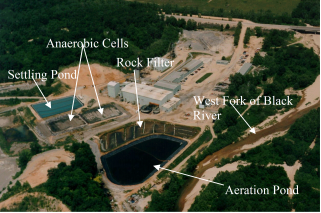
Figure B.7-1. Aerial photo of West Fork mine passive treatment system, Missouri
B.7.4 BCR Design
The passive treatment system is composed of five major parts: a settling pond, two anaerobic units (BCRs), a rock filter, and an aeration pond. The system is fully lined. The design was also integrated into the mine's pre-existing fluid management system. Specific design characteristics include:
- A rectangular-shaped, 40 mil HDPEhigh density polyethylene-lined settling pond with a top surface area of 32,626 square feet (0.75 acres) and a bottom surface area of 20,762 square feet (0.48 acres). The sides have slopes of 2 horizontal to 1 vertical (2H:1V). The settling pond is nominally 10 feet deep. It discharges through valves and Parshall flumes into the two anaerobic units.
- Two anaerobic BCR units are used, each with a total bottom area of about 14,935 square feet (0.34 acres) and a top area of about 20,600 square feet (0.47 acres). Each unit is lined with 40 mil HDPEhigh density polyethylene and was fitted with four sets of fluid distribution pipes and three sets of fluid collection pipes, which were subsequently modified. The distribution/collection pipes were connected to commonly-shared layers of perforated HDPEhigh density polyethylene pipe and geonet materials sandwiched between layers of geofabric. This feature of the design was intended to allow management of sulfide production in hot weather by decreasing the retention time in the unit through intentional short circuiting. The spaces between the fluid distribution layers were filled with a mixture of composted cow manure, sawdust, inert limestone, and alfalfa. The total thickness of substrate, piping, geonet, and geofabric was about six feet. The surface of the anaerobic units was covered with a layer of crushed limestone. Water treated in the anaerobic units flows by gravity to a compartmentalized concrete mixing vault and thereafter to a rock filter unit. The gravity-driven flows can be directed upward or downward.
- The rock filter is an internally bermed, clay-lined shallow unit with a bottom area of about 63,000 square feet (1.4 acres) and a nominal depth of one foot. It is constructed on compacted fill that was systematically placed on the west side of a pre-existing mine water settling pond. Limestone cobbles line the bottom of the unit and the unit is compartmentalized by limestone cobbleA stone measuring between 6.4 cm (2.5 in) and 25.6 cm (10.1 in) in size. berms. It was planted with cattails (Typha latifolia) and inoculated with local species of algae.
- The discharge from the rock filter flows through a drop pipe spillway and buried pipe into a 40 mil HDPEhigh density polyethylene lined aeration pond. The aeration pond surface covers approximately 85,920 square feet (2.0 acres). The aeration pond discharges through twin 12-inch HDPEhigh density polyethylene pipes into a short channel that leads to monitoring outfall 001 and thence into the West Fork of the Black River.
Bench-scale test results suggested that the anaerobic units be incubated with settled mine water for about 36 hours or less before fresh mine water was introduced at full flow to minimize initial levels of biological oxygen demand (BODbiological oxygen demandbiological oxygen demand), fecal coliforms, color, and manganese. For about two weeks, pumps recycled the water within the two BCR units. Based on data collected in the field, and subsequent laboratory confirmation, the water from the BCR units was routed to the tailings pond for temporary storage and later treatment and release. At that point, the rock filter and aeration ponds were brought on-line. In the meantime, the mine discharged according to plan through an overflow pipe from the settling pond as it had during construction of the other components.
After about six weeks of full-scale operation, the apparent permeability of the substrate was found to be lower than expected and the system was operating nearly at capacity. The system had been designed so that either of the two BCR units could accept the full flow amount on a temporary basis in case maintenance work required a complete unit shutdown.
B.7.5 BCR Performance
The average influent water quality can be compared with discharge water quality during the June through November 1997 period. Discharge levels of lead and other metals were reducedIn chemistry, having gained electrons. Often gaining electrons is accompanied with gaining protons (hydrogen). As an example, when O₂ reacts with H₂, the oxygen is reduced, forming H₂O. substantially from average influent levels. For lead, the level was reduced from a typical average of 0.40 mg/L to between 0.027 and 0.050 mg/L. Zinc, cadmium, and copper effluent concentrations were also reduced.
|
Parameter |
Typical Average Influent (mg/L) |
Effluent Range June-Nov 1997 (mg/L) |
|---|---|---|
|
Lead (Pb) |
0.4 |
0.0270 – 0.050 |
|
Zinc (Zn) |
0.36 |
0.055 – 0.088 |
|
Cadmium (Cd) |
0.003 |
<0.002 |
|
Copper (Cu) |
0.037 |
<0.008 |
|
Oil and Grease |
- |
<5.0 |
|
Hydrogen Sulfide (H₂S) |
- |
0.0110 – 0.025 |
|
Phosphorus, total |
- |
<0.05 – 0.058 |
|
Ammonia, as N |
0.52 |
<0.050 – 0.37 |
|
Nitrate and Nitrite |
2 |
<0.050 – 1.7 |
|
True Color |
- |
10 – 15 |
|
BODbiological oxygen demandbiological oxygen demand |
1.7 |
<1 – 3 |
|
Fecal Coliform |
- |
<1 – 2 |
|
pH |
7.94 |
6.63 – 7.77 |
|
Total Suspended Solids (TSS) |
- |
<1 – 4.2 |
Of the five parts of the system, the operation of the rock filter has been the most interesting. It operates as a natural wetland where water of a depth of 1 to 2 feet (30 to 60 cm) meanders through the limestone cobbles. Flora and fauna have thrived in this ecosystem. It has served the important function of cleansing the excess sulfide in the water that is leaving the anaerobic units. From July 1997 to September 1998, the average of 55 analyses of sulfide concentration in the water entering the rock filter was 3.3 mg/L. In 55 analyses of sulfide in the rock filter effluent, sulfide was detected in the water 20 times and none of these were above 0.25 mg/L.
Because the water entering the rock filter contains a significant concentration of sulfide, a unique ecosystem of algae and bacteria have developed in this area. In the summer of 1997, red algae/bacteria started to develop in this influent area and persisted. In addition, a white, soupy scum developed in this area. During the summer of 1997, when high levels of sulfide were entering the rock filter, the water would develop a milky white colloidal suspension that would persist throughout the wetland system. This milky suspension had diurnal characteristics; it was more persistent in the morning and sometimes clear up during the day. In the summer of 1998, this milky suspension was not as evident even though the concentrations of sulfide entering the rock filter were sometimes higher. Vegetation in the rock filter was much lusher in the second summer. The speculation is that this milky suspension was colloidal sulfur, which then was removed by this form of wetland ecosystem.
Besides removing sulfide from the water, the rock filter also plays a significant role in further reducing the concentration of lead in the water. Over four seasons from July 1997 to July 1998, the average concentration of 40 analyses of total lead in the water entering the rock filter was 0.085 mg/L and the average concentration of lead in the water exiting the rock filter was 0.050 mg/L. The mechanism for lead removal in the rock filter was not known, but is suspected to be adsorptionNon-covalent bonding of a chemical to a solid surface. to MnO₂.
B.7.6 BCR Monitoring
None reported.
B.7.7 Regulatory Challenges
Although discussions about using a passive treatment system had been held previously, the system’s original permit application was made to Missouri Department of Natural Resources after the pilot scale test had been operating for one year and on-going data from the test was added during the permit review process. This allowed regulators to be assured that an organic-based wetland-type substrate could remove dissolved lead from mine effluent as there had been some concerns regarding how effective the system would be.
The use of cow manure as an ingredient in the anaerobic cell substrates was a special regulatory hurdle because its use raised issues of BODbiological oxygen demandbiological oxygen demandbiological oxygen demand, fecal coliform bacteria and other organic-related water quality criteria problems from a non-degradation of West Fork perspective (Gusek 1998). Additional testing was requested by Missouri DNR, including monitoring for fecal coliform, color, BODbiological oxygen demandbiological oxygen demand, and other minor constituents.
DNR was also concerned about the closure and reclamation of the biotreatment system at the end of the West Fork facility life. The system was constructed within the boundaries of the waste management areas as defined by the Metallic Minerals Waste Management Act and was, by definition, a waste management structure. Therefore, closure and reclamation activities would adhere to Section 5 of the Metallic Minerals Waste Management Permit issued to ASARCO’s West Fork Unit in January, 1991(Gusek 1998).
B.7.8 Stakeholder Challenges
None observed.
B.7.9 Other Challenges and Lessons Learned
B.7.9.1 Hydrogen Sulfide Gas Lock
Research found that H₂S gas, generated by the sulfate-reducing bacteria, was being retained in the substrate in the anaerobic units; this created a gas-lock situation that prevented full design flow. A temporary solution was obtained by periodic burping of the units using the control valves. However, the burping had to be performed at 24-hour intervals, which was determined that this solution was too labor-intensive.
The sulfide gas lock problem was investigated in December 1996 by installing vent wells in the substrate and measuring the gas pressures. Observations indicated that the gas was a factor in apparent short circuiting of the water passing through the unit. The layered geotextiles (geonet and geofabric), originally intended to promote horizontal flow, appeared to be trapping the sulfide gas beneath them and vertical flow was being restricted. The permeability of the substrate itself was for the most part unaffected. However, construction practices in the south BCR unit could have contributed to the situation. Here, a low ground bearing bulldozer was used to place substrate in nominal 6-inch (15-cm) lifts. This could have created a layering effect that may have trapped gas as well. Substrate layers in the north anaerobic unit were placed in a single lift, and no layering effect was observed during subsequent excavation. It is noteworthy that the mid-cell geotextiles had not been a feature of the pilot test unit design.
The first phase of a permanent solution was implemented with a trenching machine that ripped through the geonet/geofabric layers in the south anaerobic unit. This disrupted the gas-trapping situation. Subsequently, the substrate from the entire south anaerobic unit was excavated and the unit refilled without the geotextiles in June 1997. Identical action was taken on the north anaerobic unit in September 1997. These actions have solved the gas lock problem.
B.7.9.2 Changes in Design from Pilot to Full—Scale System
A properly designed passive treatment system should be based on a phased testing program of laboratory-, bench-, and pilot-scale experiments. These experiments and the subsequent design must take into account the physical availability of some construction materials. Bench testing may have identified a superior type of organic component that the SRBsulfate-reducing bacteria favored, but it may not be available in sufficient quantities to warrant including it in the final design. Local farmers in particular are notorious for offering to give away animal manure during the testing phase of the project only to boost the price to capitalize on a captive market when large quantities need to be procured. Contractors and project owners seek relief from these situations by substituting similar but less expensive sources, which are virtually the same. Again, the West Fork Project in Missouri provides a couple of instances where minor digression from the pilot design caused subsequent problems in the full-scale system.
Gusek (2000) reported that to allow better flow control/system throttling in the full-scale BCR units during the summer, intermediate layers of perforated pipes were installed in the substrate at the 2-foot and 4-foot depths. To facilitate water collection/dispersion, the pipes were sandwiched between a layer of geonet and two layers of geotextile. Due to project scheduling, there was not time to test this concept on a pilot scale; the design change appeared to be minor. Another minor design change occurred during construction of the full-scale system. Alfalfa hay that was used in the construction of the pilot was in short supply; a source of spoiled alfalfa pellets was offered as a substitute and approved by the field engineer.
The two combined changes above had significant impacts on the ultimate hydraulic performance of the BCR units. While the geochemical characteristics of the substrate mix met the design specifications, the physical situation caused by the changes was a significant departure from the pilot design. First, the geotextile trapped some of the gases evolved from the biological activity and created a gas-lock condition that restricted fluid flow through the unit. Second, the substitution of the alfalfa product in place of the baled source yielded a substrate with a slightly lower saturated permeability than that measured in the pilot. The net result was a system that was geochemically sized to temporarily treat elevated flows, but the flow restrictions prevented this design feature of the system from being used. The condition was ultimately fixed, but a valuable lesson was learned. Even minor deviations from bench- or pilot-scale configurations or design can result in major changes in system performance and should be avoided as much as possible.
B.7.9.3 Clogging
It was expected that the BCR system would be virtually maintenance free which was not the case with the anaerobic units. Keeping these units from clogging has required periodic rototilling and back-flushing, and after almost two decades, complete reconstruction. As of 2012, the BCR units are to be rebuilt due to clogging with rock flour from active mine operations. Because attempts were made during the summer to use only a portion of the two units, maintenance has been more extensive at this time than during the winter. Nevertheless, these units have performed according to design and have been effective at removing lead from the mine water for almost two decades, albeit with several major renovations. Because of this necessary maintenance, the design of the plumbing system to include back-flushing, upflow and downflow, and use of only a portion of the unit has been particularly advantageous.
B.7.10 References
Gusek, J. J., T.R. Wildeman, A. Miller, and J. Fricke, 1998. The Challenges of Designing, Permitting and Building a 1,200-GPM Passive Bioreactor for Metal Mine Drainage, West Fork Mine, MO, in Proceedings of the 15th Annual Meeting, ASSMR, St. Louis, MO, May 17-21. pp. 203-212.
Gusek, J. J. 2000. Reality Check: Passive Treatment of Mine Drainage As Emerging Technology or Proven Methodology? Presented at SME Annual Meeting, Salt Lake City, UT, February 28, 2000.
Wildeman, T.R., Gusek, J.J., Miller, A., and Frickem, J., 1997. Metals, Sulfur, and Carbon Balance in a Pilot Reactor Treating Lead in Water. In: In Situ and Onsite Bioremediation, Volume 3. Battelle Press, Columbus, OH, pp. 401-406.
Publication Date: November 2013